UPSSSC ASO Syllabus
Important Dates (Estimated) / महत्वपूर्ण तिथियाँ (अनुमानित)
Eligibility Criteria / पात्रता मानदंड
- Master’s degree in Mathematics, Statistics, Economics, Commerce or related field (or B.Sc./B.Com + DOEACC ‘O’ Level).
- Age: 21 years on 1 July 2026 – 40 years (SC/ST/PH relaxation +5 years).
- Positive PET 2025 score.
- Indian nationality and meeting physical standards.
- गणित, सांख्यिकी, अर्थशास्त्र, वाणिज्य या संबंधित विषय में मैस्टर्स डिग्री (या बी.एससी./बी.कॉम + DOEACC ‘O’ लेवल)।
- आयु: 1 जुलाई 2026 को 21 वर्ष – 40 वर्ष (SC/ST/PH + 5 वर्ष)।
- PET 2025 में सकारात्मक अंक।
- भारतीय नागरिकता और शारीरिक मानक।
Exam Pattern (Bilingual) / परीक्षा पैटर्न (द्विभाषी)
English Overview
The written test is objective‑type, 2 hours, total 150 marks. Negative marking of –0.25 per wrong answer applies.
- Tier I – Compulsory Subjects (≈ 120‑130 questions)
- General Hindi
- General Studies / General Knowledge
- Techniques of Statistical Analysis
- Tier II – Optional Subject (30 questions): Choose one – Commerce, Economics, Mathematics, or Statistics/Mathematical Statistics.
हिंदी सारांश
परीक्षा वस्तु‑आधारित, 2 घंटे, कुल 150 अंक। प्रत्येक गलत उत्तर पर –0.25 अंक की कटौती।
- Tier I – अनिवार्य विषय (≈ 120‑130 प्रश्न)
- सामान्य हिन्दी
- सामान्य अध्ययन / सामान्य ज्ञान
- तकनीकें सांख्यिकीय विश्लेषण
- Tier II – वैकल्पिक विषय (30 प्रश्न): एक चुनें – वाणिज्य, अर्थशास्त्र, गणित, या सांख्यिकी/गणितीय सांख्यिकी।
Detailed Syllabus (English / हिन्दी) / विस्तृत सिलेबस
Compulsory Subjects
General Hindi
Unseen passage comprehension, letter writing, word formation (sandhi, samas), synonyms/antonyms, grammar (tenses, voice, mood), sentence correction, punctuation, idioms, translation (Hindi↔English).
अनदेखा अनुच्छेद समझ, पत्र लेखन, शब्द निर्माण (संधि, समास), समानार्थक/विपरीतार्थक, व्याकरण (काल, वाच्य, भाव), वाक्य सुधार, विराम‑चिह्न, मुहावरे, अनुवाद (हिंदी↔अंग्रेज़ी)।
General Studies / General Knowledge
Indian Constitution, polity, geography, history (ancient‑modern), economy (GDP, inflation, banking), science & technology, current affairs (Jan 2025‑May 2026).
भारतीय संविधान, राजनीति, भूगोल, इतिहास (प्राचीन‑आधुनिक), अर्थव्यवस्था (जीडीपी, महंगाई, बैंकिंग), विज्ञान‑प्रौद्योगिकी, समसामयिक घटनाएँ (जनवरी 2025‑मई 2026)।
Techniques of Statistical Analysis
Measures of central tendency & dispersion, skewness & kurtosis, index numbers, correlation & regression (Pearson, Spearman), probability (conditional, Bayes), permutations & combinations, sampling techniques, Indian statistical system (NSO, Dept. of Econ‑Stat), application of statistics in Indian economy.
केंद्रीय प्रवृत्ति एवं प्रसरण, स्क्यूनेस एवं कर्टोसिस, सूचकांक, सहसंबंध एवं प्रतिगमन (पियर्सन, स्पीयरमैन), प्रायिकता (शर्तीय, बायेस), क्रमचय एवं संयोजन, नमूना तकनीक, भारतीय सांख्यिकीय प्रणाली (NSO, अर्थ‑सांख्यिकी विभाग), भारतीय अर्थव्यवस्था में सांख्यिकी का प्रयोग।
Optional Subject (Choose One)
Details for each optional subject are provided in the table below. The weightage remains 30 questions (30 marks).
| Optional Subject | Core Topics (English) | मुख्य विषय (हिन्दी) |
|---|---|---|
| Commerce | Accounting basics, Balance Sheet, Profit‑Loss, Business Laws, Economics fundamentals, Financial Management. | लेखा मूलभूत, बैलेंस शीट, लाभ‑हानि, व्यापार कानून, अर्थशास्त्र मूलभूत, वित्तीय प्रबंधन। |
| Economics | Micro – demand‑supply, elasticity, market structures; Macro – national income, inflation, fiscal & monetary policy; Indian economy. | सूक्ष्म – मांग‑आपूर्ति, लोच, बाजार संरचनाएँ; व्यापक – राष्ट्रीय आय, महंगाई, राजकोषीय एवं मौद्रिक नीति; भारतीय अर्थव्यवस्था। |
| Mathematics | Calculus, Algebra (matrices, determinants), Probability & Statistics, Numerical Methods. | कलन, बीजगणित (मैट्रिक्स, नियतांक), प्रायिकता एवं सांख्यिकी, संख्यात्मक विधियाँ। |
| Statistics / Mathematical Statistics | Probability theory, estimation, hypothesis testing, time‑series, index numbers. | प्रायिकता सिद्धांत, अनुमान, परिकल्पना परीक्षण, समय शृंखला, सूचकांक। |
Mapping: Syllabus ↔ Exam Pattern / सिलेबस ↔ परीक्षा पैटर्न का संबंध
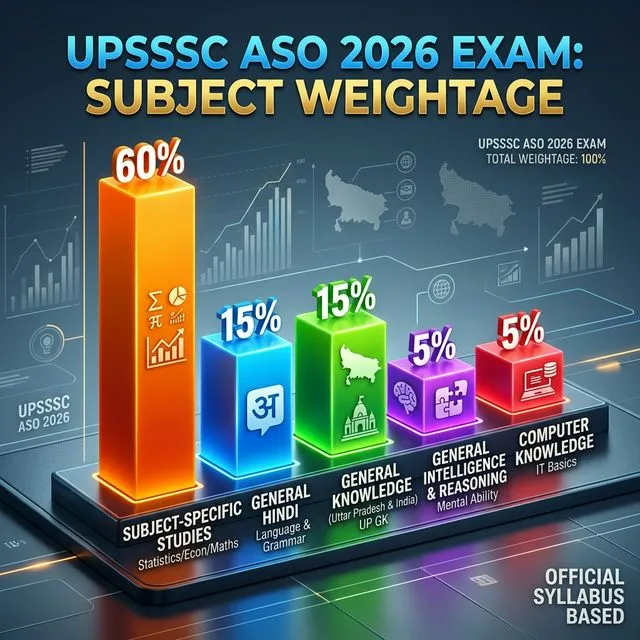
The following matrix shows how each syllabus topic aligns with the number of questions expected in the exam. This helps you allocate study time proportionally.
| Syllabus Topic | Estimated Question Weightage | Study Hours (Suggested) |
|---|---|---|
| General Hindi – Comprehension & Grammar | 20 questions (≈ 13 %) | 30 hrs |
| General Studies / GK – Constitution, Polity, Geography, History, Economy, Science | 40 questions (≈ 27 %) | 60 hrs |
| Techniques of Statistical Analysis – Measures, Correlation, Regression, Probability, Sampling | 60 questions (≈ 40 %) | 80 hrs |
| Optional Subject (chosen) | 30 questions (≈ 20 %) | 40 hrs |
By following the above allocation, you can cover the entire syllabus efficiently while focusing on high‑weightage areas.
Preparation Tips (English & Hindi) / तैयारी टिप्स
- Start with the compulsory subjects – they constitute ~70 % of the paper.
- Use the mapping table to prioritize high‑weightage topics.
- Practice 3‑4 full‑length mock tests per week; review each answer critically.
- Maintain a daily 2‑hour study slot for the optional subject.
- Keep a current‑affairs notebook updated weekly.
- अनिवार्य विषयों से शुरुआत करें – वे पेपर के ~70 % होते हैं।
- मैपिंग तालिका से उच्च‑वज़न वाले टॉपिक को प्राथमिकता दें।
- प्रति सप्ताह 3‑4 पूर्ण‑लंबाई मॉक टेस्ट दें; प्रत्येक उत्तर का विश्लेषण करें।
- वैकल्पिक विषय के लिए रोज़ाना 2 घंटे रखें।
- सप्ताहिक समसामयिक नोटबुक बनाएँ।
Frequently Asked Questions (FAQ) / अक्सर पूछे जाने वाले प्रश्न
What is the official PDF for UPSSSC ASO 2026 syllabus?
Download it from the button at the bottom of this page.
How many questions are there in the optional subject?
Exactly 30 questions (30 marks).
Is there negative marking?
Yes – 0.25 marks deducted for each wrong answer.
Can I change my optional subject after submission?
No. The optional subject must be selected during the application.

Expert content writer at Global Drishti, dedicated to providing accurate and timely updates on Sarkari Naukri, Government Schemes, and Political Trends. Trusted by students and job aspirants.